

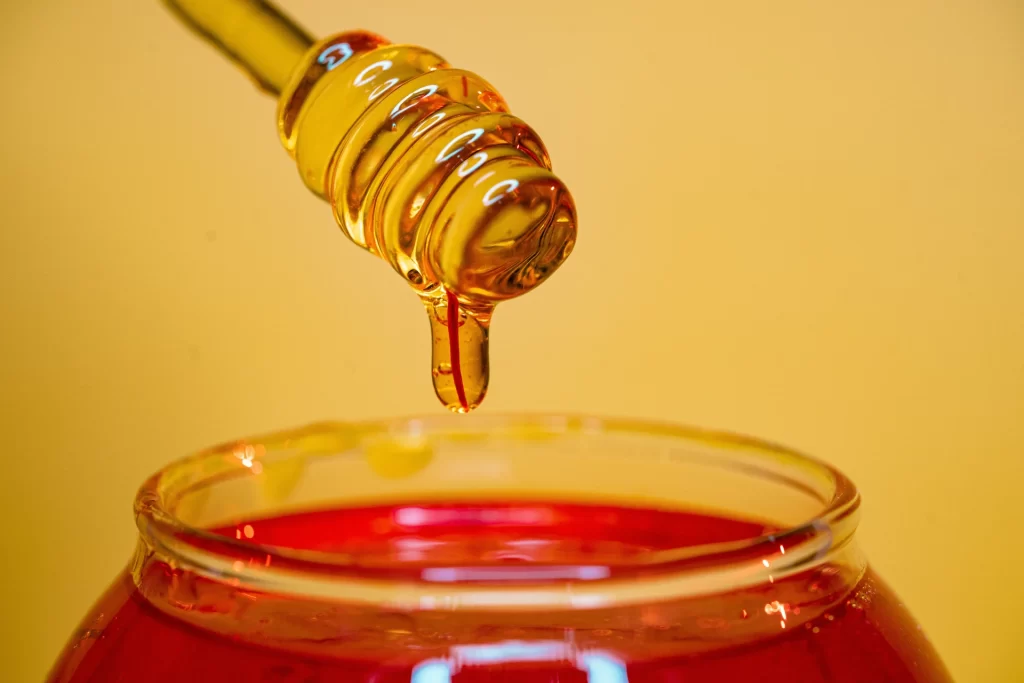
Honey quality depends on many factors — climate, biodiversity, floral sources, beekeeping practices, and processing methods. In the Baltic region, and particularly in Lithuania, natural conditions create a unique environment for producing honey with distinctive flavour, aroma, and naturally rich composition.
Lithuanian honey is widely appreciated for its purity, diversity, and high quality standards. According to research and controls conducted by Lithuanian food safety authorities, QSI, Intertek and other well-known EU laboratories, honey sold in Lithuania complies with strict regulatory requirements and food safety standards. Additionally, Baltic honey is often recognised for qualities that go far beyond minimum requirements.
The Advantage of Baltic Nature
The natural environment of Lithuania and the Baltic region plays an important role in honey quality.
Unlike hotter southern climates, where plants bloom rapidly due to higher temperatures, northern climates experience slower and longer flowering periods. This gives flowering plants more time to develop and accumulate natural compounds before bees collect nectar.
Lithuania’s meadows, forests, and wild flora provide bees with access to a diverse variety of nectar-producing plants. As a result, Baltic honey often develops a richer aroma, stronger taste profile, and more complex natural composition.
The botanical diversity of the region also means that honey characteristics naturally vary throughout the season. Spring honey can be lighter, softer and milder in flavour, while late summer honey may become darker, richer and with more intense aroma.
Raw Honey With Minimal Processing
One of the factors that distinguishes high-quality Baltic honey is minimal processing.
At Apiproduktai, we supply raw, natural Lithuanian honey that is not subjected to intensive high-temperature treatment before packaging.
Raw honey comes directly from the hive and preserves its natural properties, aroma, texture, and authentic floral profile. It is free from additives and unnecessary processing.
Excessive heating of honey — commonly used in some industrial processing methods — may alter its natural composition. High temperatures can reduce enzyme activity and affect biologically active compounds naturally present in honey. This is why maintaining gentle handling and proper storage conditions is essential for preserving honey quality.
Rich Biological Composition
Honey is much more than a natural sweetener. It is a naturally complex product created by bees from nectar and honeydew collected from plants.
Depending on floral origin, honey naturally contains:
• enzymes
• amino acids
• antioxidants
• natural carbohydrates
• organic acids
• vitamins and minerals
Bee products may also contain naturally occurring vitamins including A, B-group vitamins, C, D, E, and K, alongside essential minerals and trace elements such as potassium, calcium, magnesium, iron, zinc, selenium, and others.
The exact composition varies depending on seasonal flowering and nectar source, making every honey harvest unique.
Naturally High Enzyme Activity
One important indicator of honey quality is enzyme activity, often measured through diastase value according to the Schade method.
Baltic honey can demonstrate particularly strong natural enzyme activity due to regional climate conditions and minimal processing. Longer flowering periods and cooler temperatures may contribute to naturally richer nectar composition.
For consumers and industrial buyers alike, enzyme activity is one of the indicators associated with freshness and authenticity of honey.
Every Batch Is Laboratory Tested
Quality assurance is a key part of modern honey production.
To ensure consistency and compliance with international standards, honey batches undergo extensive laboratory testing in specialised laboratories in Lithuania and Germany.
Testing includes a wide range of quality parameters such as:
• moisture content
• HMF levels
• diastase activity
• acidity and pH
• electrical conductivity
• pollen analysis
• colour and botanical profile
• antibiotic residues
• pesticide screening
This level of quality control helps ensure traceability, authenticity, and product safety for customers across international markets.
Baltic Honey — Shaped by Nature
One of the most fascinating characteristics of authentic honey is that no two harvests are exactly the same.
Honey naturally varies in flavour, colour, aroma, and texture depending on two key factors: the season and the surrounding flora available to bees. As plants bloom at different times of the year, bees collect nectar and honeydew from changing botanical sources, resulting in honey with unique seasonal characteristics.
Generally:
• lighter honey varieties tend to have a milder flavour and softer aroma
• darker honey often has a richer taste and may naturally contain higher levels of enzymes and minerals
Local biodiversity also plays an essential role. Lithuania’s meadows, forests, and wild flowering plants create a naturally diverse forage environment for bees. Combined with the cooler Baltic climate and longer flowering periods, this contributes to honey with distinctive sensory qualities and naturally rich composition.
Because of these natural factors, there is no “standard” honey that always tastes the same. Each harvest reflects the unique interaction between climate, season, flowering plants, and bee activity. This natural variation is one of the strongest indicators of authentic, minimally processed honey.
At Apiproduktai, we focus on supplying raw Lithuanian honey and bee products that preserve the characteristics created naturally by bees and the Baltic environment.
For those interested in enjoying our honey at home, our retail honey varieties are available at Wild Meadow Honey, where customers can explore a selection of premium Lithuanian honey in jars for everyday use.

