

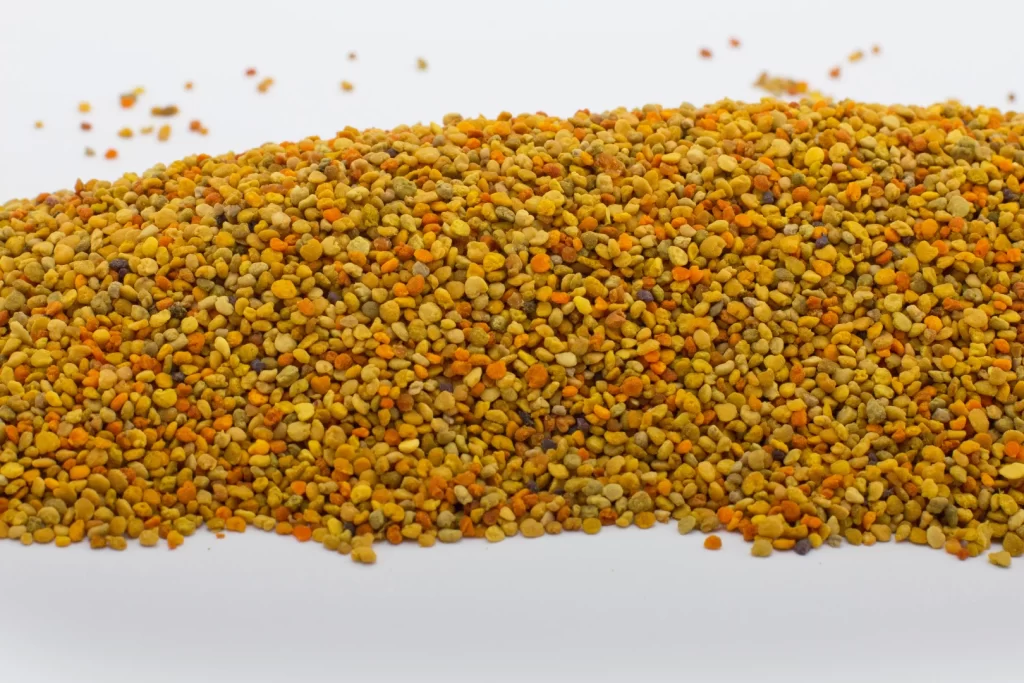
Bee pollen is one of the most complete natural foods created in nature. It is a biologically active substance collected by bees from flowering plants and is naturally rich in proteins, amino acids, vitamins, enzymes, antioxidants, lipids and plant-based nutrients.
Because bees collect pollen directly from flowers, each granule carries the natural fingerprint of the plants it comes from. This makes bee pollen one of the most diverse and complex natural food substances available.
At Apiproduktai, we supply high-quality Baltic bee pollen collected in Lithuania — a region known for its rich biodiversity and clean natural environment.
What Makes Bee Pollen a Unique Natural Product?
Bee pollen is created during the natural foraging process of bees. A single bee can carry nearly half of its body weight in pollen using special pollen baskets on its legs.
Bees typically collect pollen from one plant species per flight, which ensures efficient pollination. During this process, pollen grains from flowers are gathered, mixed with natural enzymes, and packed into small granules.
This makes bee pollen:
• naturally rich in nutrients
• highly diverse in composition
• biologically active
• completely plant-based and seasonal
Bee pollen is not a medicine, but it is widely valued as a natural dietary supplement due to its nutrient density.
Why Baltic Bee Pollen is Exceptional
Baltic bee pollen stands out because of the unique natural environment of Lithuania and surrounding regions.
Our pollen is collected from over 70–100 different plant species, depending on season and location. This creates an exceptionally rich and diverse botanical profile compared to many other regions, where bees may rely on a more limited number of flowering plants.
The Baltic region is characterized by:
• wild meadows with diverse flowering plants
• forests rich in trees, herbs, and shrubs
• long and varied flowering seasons
• minimal industrial impact and clean environment
This biodiversity directly influences the quality of bee pollen — affecting its color, aroma, taste, and nutritional composition.
Botanical Diversity of Baltic Bee Pollen
Baltic bee pollen reflects a wide range of natural plant sources, including:
• Raspberry (Rubus)
• White Clover (Trifolium repens)
• Dandelion (Taraxacum)
• Willow (Salix)
• Birch (Betula)
• Buckwheat (Fagopyrum)
• Rapeseed (Brassica napus)
• Pine (Pinus)
• Oak (Quercus)
• Phacelia (Phacelia)
• Yarrow (Achillea)
• Meadow flowers and wild herbs
• Carrot family plants (Apiaceae)
• Various grasses (Poaceae)
This wide botanical spectrum results in natural variation in:
• color (yellow, orange, green, brown tones)
• taste (mild, floral, slightly sweet)
• aroma (meadow-like, floral, honey-like complexity)
Each batch of pollen is naturally unique, reflecting the season and plant availability.
Nutritional Value of Bee Pollen
Bee pollen is known for its exceptionally rich nutritional profile. It contains a wide spectrum of biologically active compounds, including:
• 26–40% proteins (complete amino acid profile)
• natural enzymes and coenzymes
• vitamins A, B-complex, C, D, E, and K
• essential minerals such as potassium, magnesium, iron, zinc, and phosphorus
• omega-3, omega-6, and other fatty acids
• antioxidants such as flavonoids and carotenoids
• natural plant compounds (polyphenols and phytosterols)
Bee pollen also contains dietary fibers that act as natural prebiotics, supporting healthy gut microbiota.
Because of its composition, bee pollen is often described as one of the most nutrient-dense natural foods available.
Natural Bioactive Action
Bee pollen contains a wide range of biologically active compounds, including flavonoids, carotenoids, and phenolic substances.
These compounds are associated with:
• antioxidant activity
• anti-inflammatory properties
• antibacterial and antiviral potential
• support of natural immune function
Fresh pollen is biologically active, but since it spoils quickly, it is usually dried or frozen. In its natural form inside the hive, bees ferment pollen into “bee bread,” which increases nutrient bioavailability and allows long-term storage.
Quality, Purity and Safety
Baltic bee pollen is known for its high quality standards and clean natural profile.
Our pollen is:
• carefully dried to low moisture levels (≤ 9%)
• free from additives or artificial processing
• GMO-free
• tested for pesticides, antibiotics, heavy metals, and contaminants
• Very low PA (pirolizide alkaloids level) < 100 µg/kg
• without irradiation or other processing
• compliant with European pharmacopoeia microbiological standards
How Bee Pollen Is Commonly Used
Bee pollen can be consumed in several simple ways:
• directly as granules
• mixed with honey
• added to yogurt or smoothies
• combined with water or juice
• taken in capsules
A typical daily intake varies depending on age and individual needs. Many people start with small amounts and gradually increase intake.
Bee Pollen as Part of a Balanced Natural Lifestyle
Bee pollen has been traditionally used as a natural food supporting general well-being. It is associated with:
• nutritional balance and energy support
• digestive system support
• antioxidant protection
• immune system function
• overall vitality and metabolic support
Because it contains such a wide range of nutrients, it is often used as part of a balanced and healthy diet.
Baltic Bee Pollen — Pure Nature in Every Granule
Baltic bee pollen is more than just a natural supplement — it is a reflection of a clean environment, diverse flora, and traditional beekeeping practices.
Its uniqueness comes from nature itself:
• rich biodiversity
• over 70–100 plant sources
• clean northern ecosystems
• slow seasonal development of flora
At Apiproduktai, we are committed to preserving this natural quality and delivering bee products that reflect the true character of the Baltic region.

