

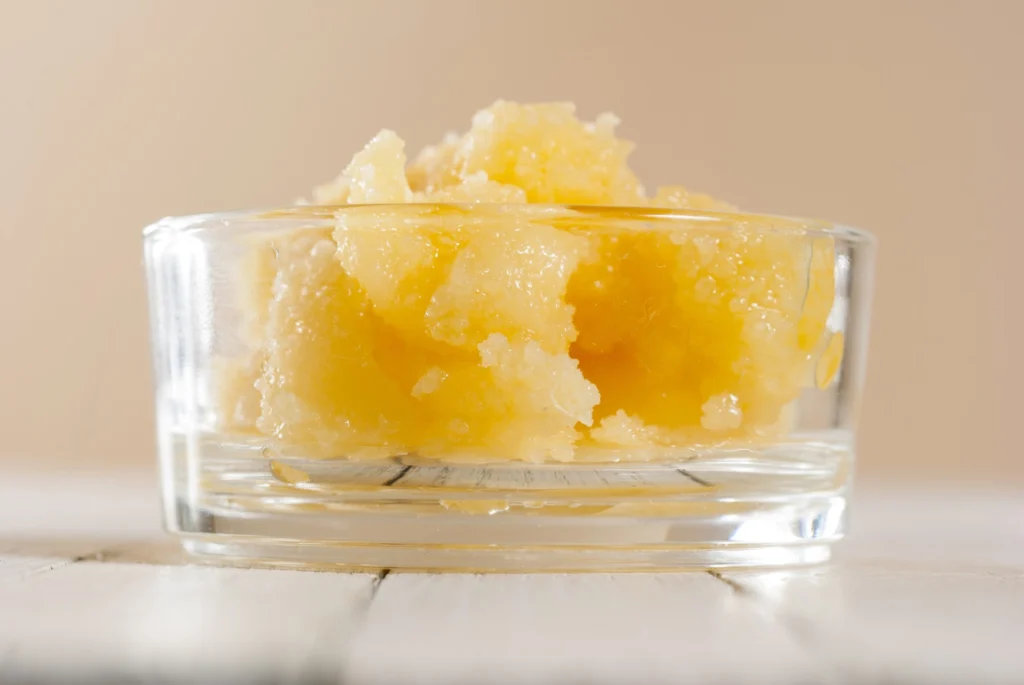
Honey crystallisation is a completely natural process that occurs in authentic, raw, high quality honey. It is a normal physical change and one of the clearest signs that honey is genuine and minimally processed. Crystallization should always be seen as a positive indicator of authenticity, not a defect.
Why Crystallisation Happens
Honey is a natural solution of sugars, mainly glucose and fructose. Over time, glucose naturally separates from water and forms crystals. This process depends on the natural composition of the honey, especially the ratio of glucose to fructose.
Because every honey comes from different flowers and seasons, each batch behaves differently. Some types crystallize quickly, while others remain liquid for longer periods.
Temperature and Storage Conditions
Storage conditions also influence crystallization. Honey stored in cooler environments will crystallize faster, while warmer conditions slow the process. However, crystallization can occur in all natural honey over time regardless of storage.
Different Textures of Crystallised Honey
Crystallised honey can take different forms: – fine and creamy with a smooth, spreadable texture – coarse or grainy depending on crystal formation – partially crystallised with mixed textures. For example, Dandelion honey has a creamy or butter-like structure when crystallised. HoneyDew honey, on contrary, is not crystallising though the time.
All forms are natural and do not affect the quality, safety, or nutritional value of honey.
Crystallisation as a Sign of Authentic Honey
Crystallization is always a positive sign. It indicates that the honey is real, raw, and has not been excessively heated or industrially processed. Highly processed honey is often engineered to remain liquid, but this is usually achieved through heat treatment that destroy natural qualities, enzymes, nutritional value.
At Apiproduktai, you may find only raw, authentic honey varieties.
How to Return Honey to Liquid Form
If honey crystallizes, it can be gently returned to a liquid state without losing its natural qualities if done correctly.
The best method is to place the honey jar in warm water and allow it to slowly return to a smooth consistency. The water temperature should not exceed 38°C, as higher temperatures may affect natural enzymes and beneficial compounds.
It is important not to use boiling or very hot water. Instead, slow warming over a longer period (even a few hours) is the most gentle method. This allows the honey to gradually become liquid again while preserving its natural properties.
Natural Variation Between Honey Types
Crystallization speed varies depending on floral origin and natural sugar composition. Honey with higher glucose content tends to crystallize faster, while honey richer in fructose remains liquid for longer. This natural variation is part of what makes every honey unique.
Conclusion
Crystallization is a natural and expected process in most varieties of raw honey. It is always a positive sign of authenticity and purity. Every jar of honey reflects its floral source, season, and natural composition, and crystallization is simply part of its natural life cycle.

